Concrete parking lot building in Visalia CA - a lot built for the traffic it carries
Ruts, potholes or water standing where people park? We build a concrete lot planned around the vehicles that use it every day.
- Owner at your site I look at the lot myself and run the crew on it.
- Truck lanes planned first We ask where heavy vehicles go and build those areas for them.
- Joints shown before pouring You see the joint layout across the lot ahead of time.
- Problems raised at estimate If the site has an issue, you hear it from me early.
- Licensed and fully insured.
- Free quotes on site.
- We respond within 1 business day.
How can you tell a parking lot needs to be rebuilt?
A parking lot usually shows it's failing long before it's past saving. Catching these signs early means a smaller job, or a clear reason to start over with concrete.
Ruts and potholes in asphalt
Soft spots where cars turn and brake usually mean the surface is giving way under traffic. Every season you wait, the holes get wider and patching buys less time.
Puddles that sit after rain
Standing water means the lot wasn't sloped to drain, or part of it has settled. Water that sits works into the base and softens the ground under the paving.
Dust and gravel everywhere
A gravel or dirt lot throws dust when it's dry, turns to mud when it's wet and gets tracked inside. The ruts keep coming back, so the upkeep never ends.
Cracks running across the slab
Cracks that wander through an old concrete lot usually mean the joints were cut late or skipped. Left open, they let water under the slab and the pieces start moving.
Sinking where trucks turn
A low spot where deliveries come in usually means that area was never built for the weight. Each heavy load pushes it further down and breaks the edges around it.
Crumbling edges at the street
Edges that chip where the lot meets the street usually mean thin paving or a weak base. The damage creeps inward every time a tire drops off.
Concrete parking lot building, from the ground up
Concrete parking lot building in Visalia starts with a question I ask early, which is where delivery trucks and heavier vehicles will drive, so we can build those lanes for the weight and keep the rest of the lot practical. Our crew then digs out and packs the subgrade, the ground the slab sits on, until it's firm and even all the way across, because a lot sinks wherever that ground was left soft. We set the forms so water runs off and away from the building, pour in the cooler part of the day so the top doesn't come out weak and dusty, and give it a broom finish, a light texture that gives tires and shoes some grip. Before we pour, I show you where the control joints will go across the lot, since those cut lines are where the slab is meant to crack as it shrinks, in a straight line we picked instead of wherever it wants. The concrete then needs time to cure, the wait while it hardens and gains strength, before anyone parks on it. If the budget gets tight, I'd rather you spend it on the base than on the finish, because nobody sees the base on day one but it's what keeps the lot flat for years. The price mostly moves with the size of the lot, how much of it has to carry trucks and what has to come out first, and the schedule turns on any city review and the cure more than on the pour itself. Your written estimate puts your own numbers on all of that.
A lot rarely stands alone. Light poles, signs and block walls sit on concrete footings, and we pour those as part of the same plan so they line up with the paving. If the building the lot runs up to has settled, foundation raising should come first, because new concrete needs to meet a building that isn't still moving.
What happens after you call about a parking lot in Visalia?
From the first call to the final walk, you deal with me, and the plan is settled in writing before our crew shows up.
Call and I come out
You call and I come out myself to walk the site, take measurements and ask what you need the lot to handle day to day.
Go over the written estimate
You get a written estimate, and we talk through the plan and the permit question together before anything gets booked.
Prep and pour the lot
I'm on site with our crew from the base work through the pour, so the person you talked to is the one making the calls.
Walk the finished lot
When the work is done we walk the lot together, and I go over when it's ready for cars and when it's ready for trucks.
Why Visalia property owners call Advanced Visalia Concrete
The owner runs the job
I look at the lot myself and I'm on site while our crew works, so nothing gets lost between estimate and pour.
Visalia-based since 2023
I started as a helper and learned the trade one pour at a time before opening this business in Visalia in 2023.
Licensed and fully insured for your lot
We're licensed and fully insured, which is worth checking with any crew working on your property.
Permits settled before booking
Visalia issues permits only to owners or licensed contractors, so we settle who applies before booking and file it when it's ours.
Get a written estimate for your parking lot
Tell us the lot's rough size and the kinds of vehicles it will carry, and we'll reply within one business day to set up a visit. The estimate is free and done on site, with no obligation to book.
Concrete lot and paving examples
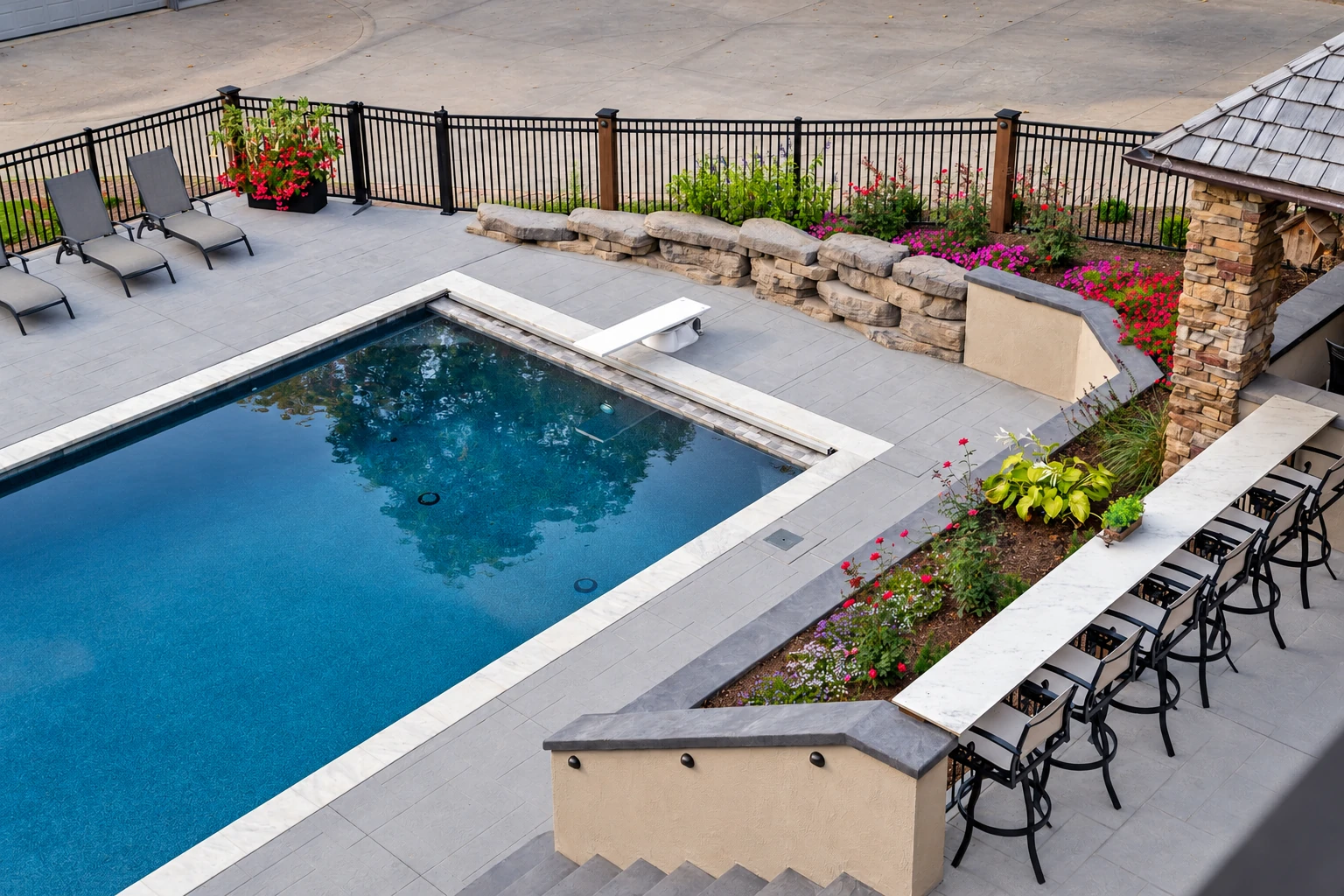
Look through these examples of concrete parking areas and flatwork to get a feel for finishes, joint lines and layouts before we talk.
Parking lot questions we hear
Here are straight answers to what property owners ask most about a concrete lot. If your site has its own wrinkle, call and I'll talk it through with you.
How long does a concrete parking lot last?
A concrete parking lot typically lasts 20 years or more, so it's worth planning and budgeting for as a long-term part of the property. Concrete holds its shape under turning and braking vehicles, drains with only a slight slope and needs fairly simple upkeep. Most of what we do on the job is aimed at getting you that full span.
How much does a concrete parking lot cost per square foot in Visalia?
Across California, an installed standard 4-inch slab with a basic broom finish usually runs about $9 to $18 per square foot. That's the going market range, not our quote, and areas built for trucks, old paving to tear out and extra site work move a lot up or down from there. We put your own figure in writing after I've seen the site.
How long does new concrete need before cars and trucks can drive on it?
An industry guide says to keep cars off a new lot for 3 days and trucks off for 7 days, unless tests show the concrete has gained enough strength sooner. Plan other parking and delivery access for that stretch, and set deliveries around the longer wait.
Do I need a permit to build a parking lot in Visalia?
Expect at least a city review, because Visalia requires Site Plan Review for site improvements in every zone except new single-family homes and their additions. Work that reaches into the city's right-of-way along the street needs an encroachment permit before it starts, and a project that disturbs an acre or more of soil, or belongs to a larger development plan that does, needs coverage under the state water board's construction stormwater permit. City permits are issued through the permit counter.
How thick should a concrete parking lot be?
An industry guide says 4 inches of unreinforced concrete is usually enough for areas used only by cars and pickup or panel trucks, while areas that carry heavier trucks get designed for that weight. The same guide says no special base layer is needed underneath, but the ground has to be even in soil type, moisture and density, so that's where our prep time goes.
What license does a concrete contractor need in California?
California's C-8 concrete contractor classification covers forming, pouring, finishing and installing pavement and flatwork, the flat slabs like lots, drives and walks. That makes it the one that fits a parking lot job, so ask any bidder about it before you sign.
Ask about a concrete parking lot for your property
Calling before the site plan is final lets us build the truck lanes, joints and drainage into it instead of working around them.